The Resilience Strategy will evaluate current and future coastal flood risks and vulnerabilities and identify ways to adapt and become more resilient to flooding. Outcomes from this plan will be integrated into the CAMA LUP to ensure a stronger focus and more coordinated approach to resilience.
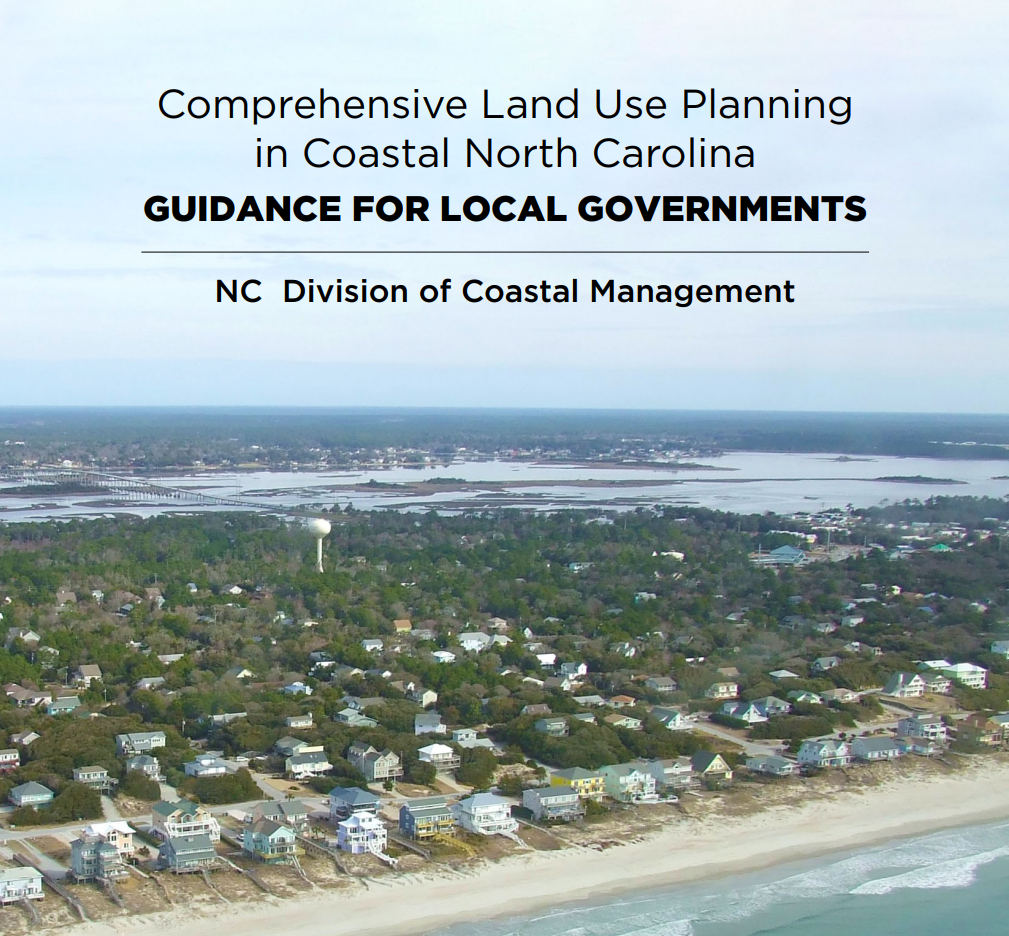
A land use plan is a collection of policies and maps that serve as a community’s blueprint for growth. They provide guidance for both individual projects and a broad range of policy issues, such as the development of regulatory ordinances and public investment programs.
Resilience can be defined as increasing a community’s ability to rebound, positively adapt to, or thrive amidst changing conditions or challenges—including disasters and climate change—and maintain quality of life, healthy growth, durable systems, and conservation of resources for present and future generations.
The Division of Coastal Management works to protect, conserve and manage North Carolina's coastal resources.

RCCP supports a locally driven process for setting coastal resilience goals, assessing community capacity, and identifying and prioritizing projects that strengthen resilience to coastal hazards.
The Coastal Area Management Act requires each of the 20 coastal counties to have a local land use plan in accordance with guidelines established by the Coastal Resources Commission (15A NCAC 07B).